Culture Economy
Designing a digital experience around a physical one
How Brennan’s workshop became a platform he could scale.
- Client
- Culture Economy
- Role
- Solo designer
- Platform
- Consumer app, mobile-first
- Timeline
- 8 months
What is Culture Economy?
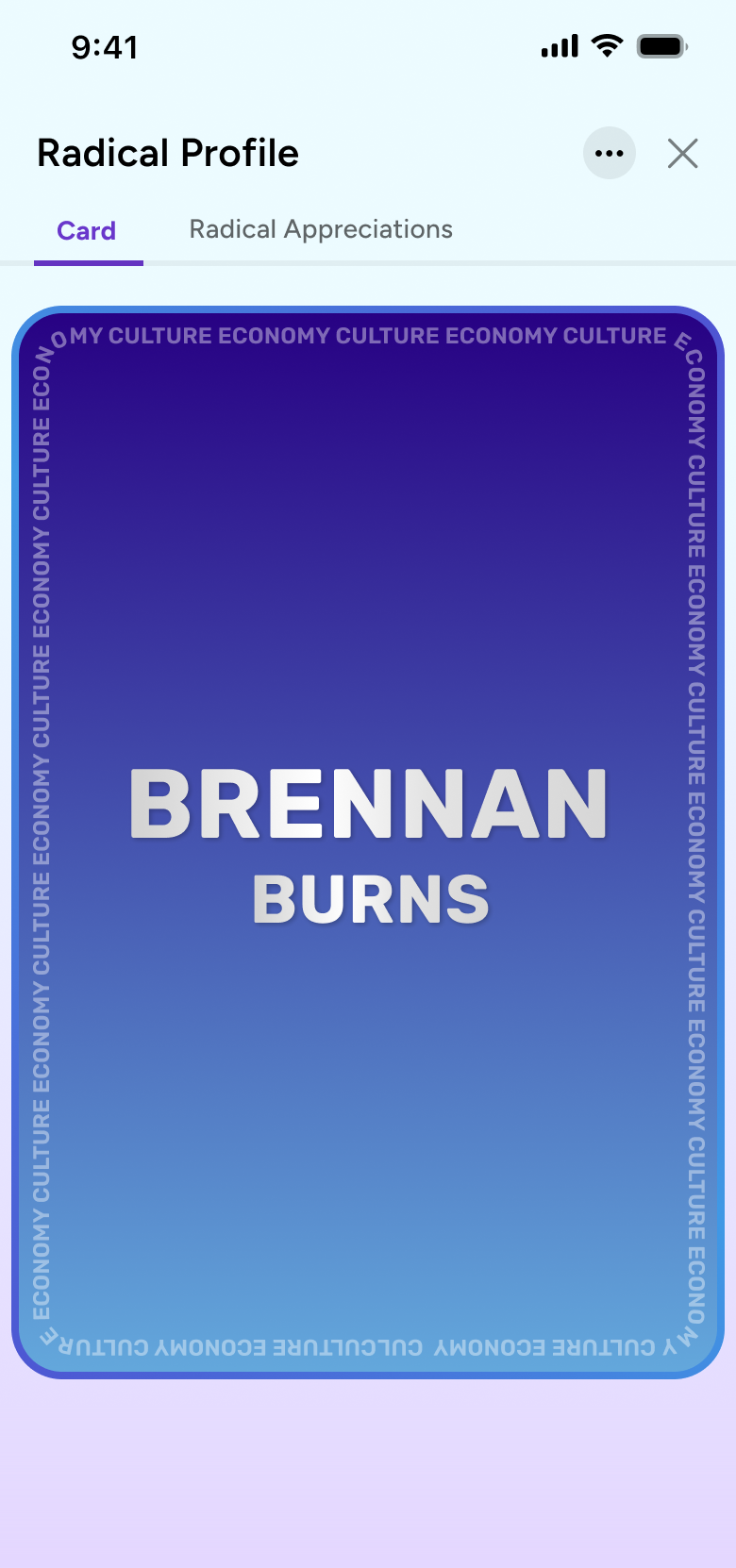
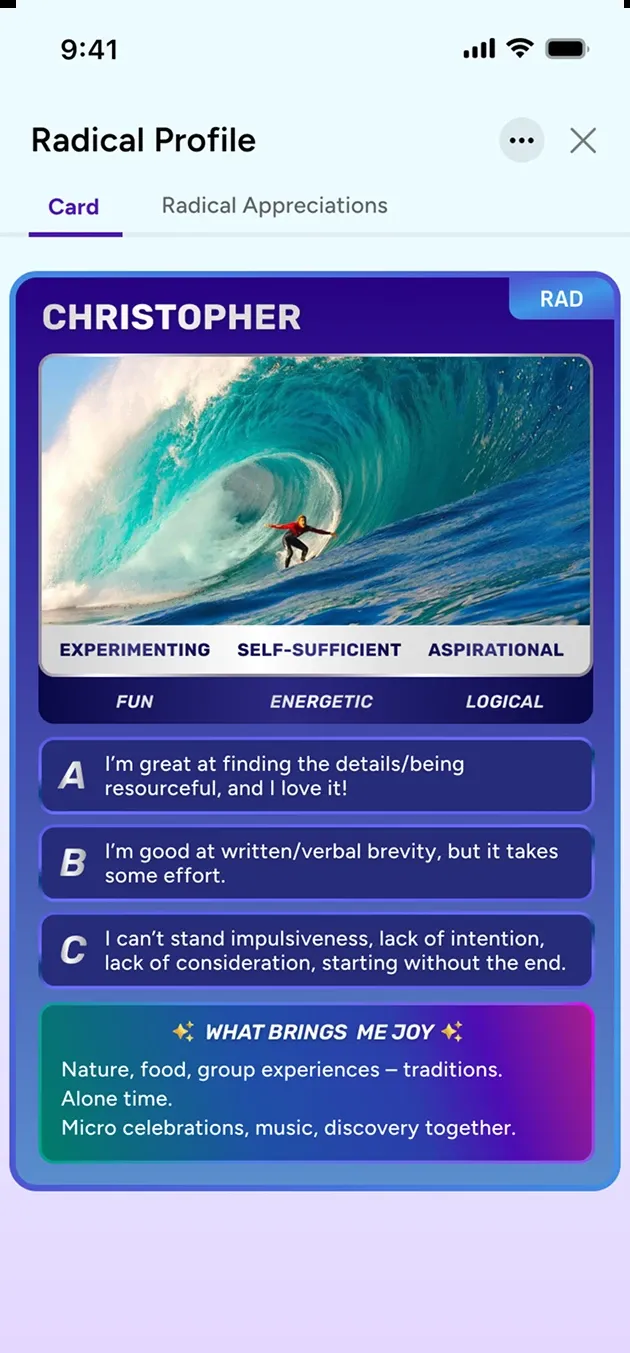
Culture Economy is Brennan Burns’ business, built around his “Radical Appreciation” philosophy: the idea that recognizing people for who they actually are, not just what they do, changes how they show up at work. Participants take a survey, and the platform turns their answers into a personalized “Radical Profile,” a baseball-card-style summary of their strengths, values, and what makes them, them.
Meet Brennan, a totally rad guy.
He’s the kind of person who remembers something specific about you after one conversation, and genuinely means it every time he calls something “rad.” If the software didn’t carry that, it would just be another corporate recognition tool.
He was building each profile by hand.
Before the platform, running Radical Appreciation for an organization meant Brennan personally collecting survey answers from every participant, then building each “Radical Profile” himself, one at a time. That worked for a single workshop. It didn’t work once he was juggling multiple organizations, each one coming back for another workshop every few months.
The platform had to take all of that over: take in survey results, generate a Radical Profile for each participant, and organize people into the groups and organizations they actually belonged to.
Designing the profile
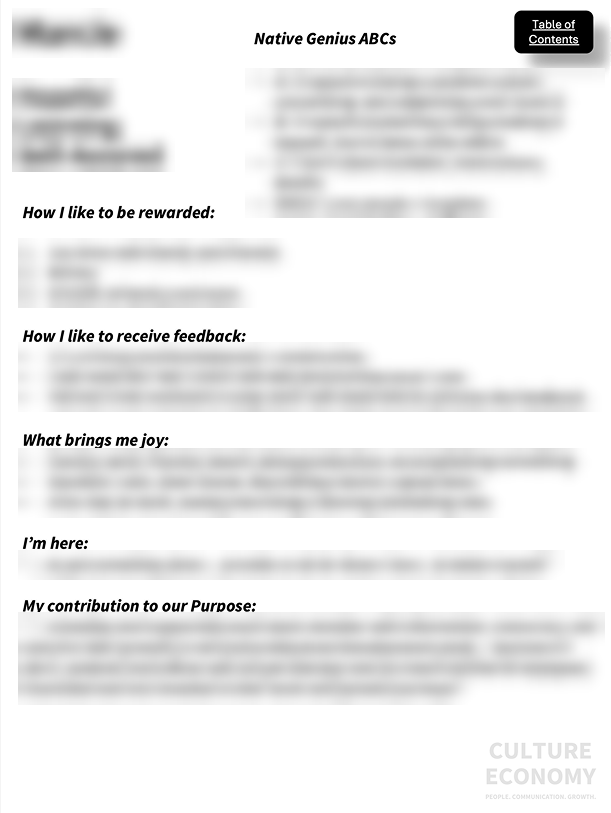
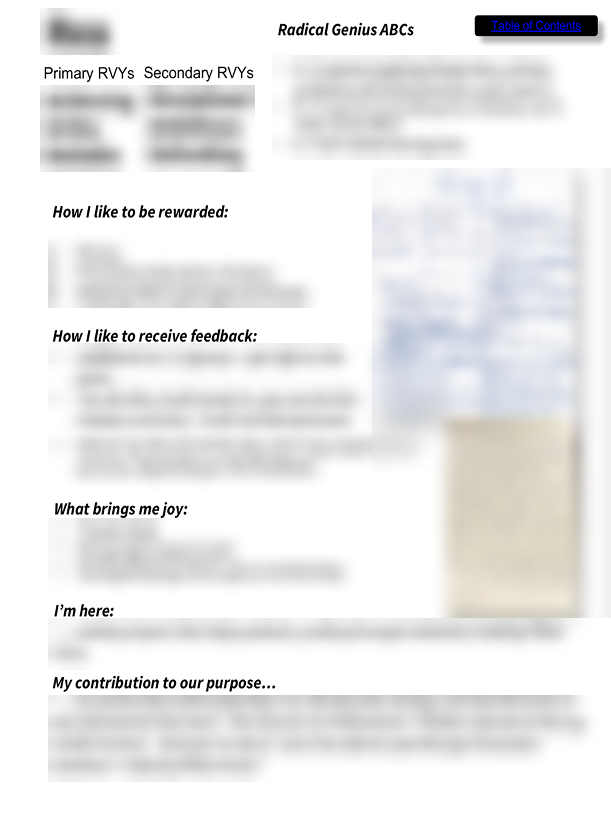
Collectible cards were the inspiration from the start. The badge, the attribute tags, the whole layout draws from things like Pokémon cards. We wanted Brennan’s Radical Profiles to feel fun and cool, not just another corporate printout.
Turning a rule into a Rad Lib
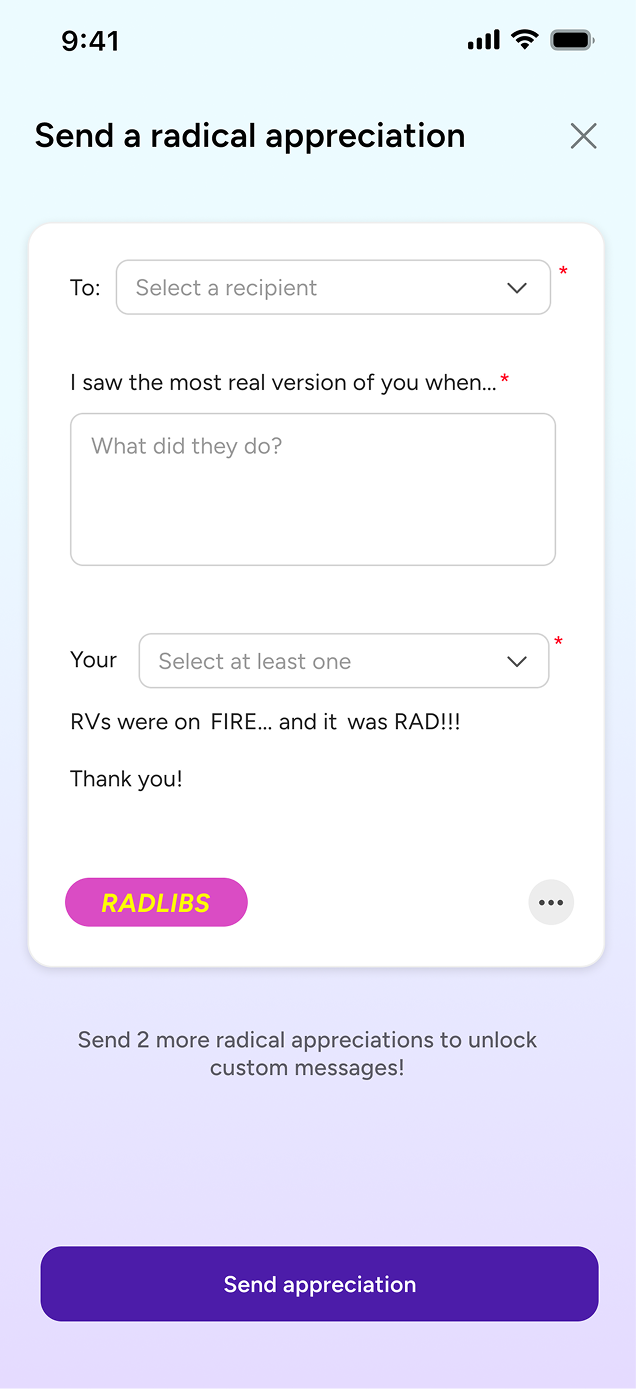
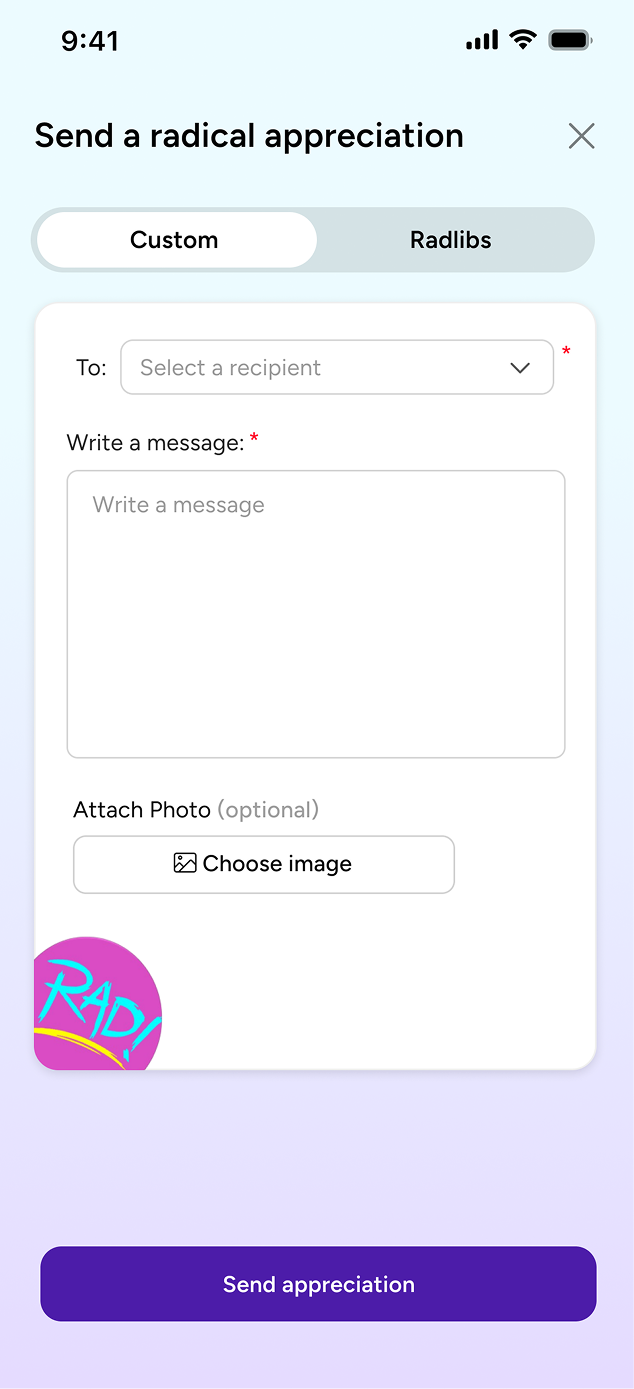
Brennan’s method starts everyone with structured appreciations and unlocks freeform messages after three. The structure teaches what a meaningful appreciation sounds like and keeps people from freezing at a blank note field.
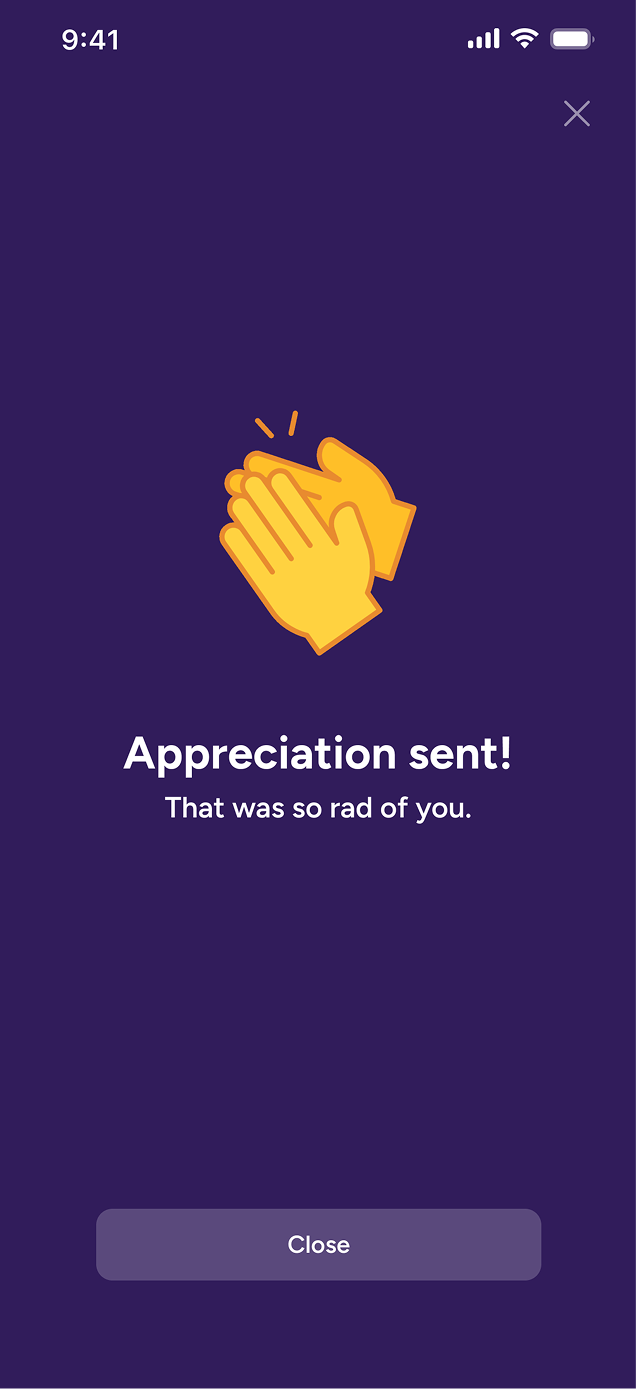
While designing the send flow, I based the structured version on Mad Libs: pick someone, choose from their top traits, and the app builds the appreciation. I named it Rad Libs and presented it a few sprints in. Brennan loved it, and it made it into the final build. His paper version had shown that some people prefer the formula, so Rad Libs stay available after freeform unlocks.
Making the cards feel physical
Brennan runs his workshops in person, and I wanted people to be able to show their card to whoever they’re talking to. From the home screen, tapping the header in your card’s color opens your full card: cover first, then it flips over to the front.
I built the interaction in HTML, CSS, and jQuery so the developers could see exactly how it should feel. They adapted my code for Angular, and it shipped the way I built it.
What changed for Brennan.
Building a single profile used to take him hours. Now it takes minutes. What used to work for one workshop at a time can now run for multiple organizations at once. Brennan still does the part only he can do: reading a room, running the workshops, showing up as himself. Everything that used to eat his time around that is just software now.